
I've always been interested in food in movies. Even as a kid, when I watched westerns, in addition to the gun-play and fist fights, I payed close attention to what the cowboys ate over their campfires, or at the tavern. I'd become hungry for baked beans, steak, and drop dumplings every time I saw The Duke take on the bad guys. I even wanted to try the corn dodgers from Rooster Cogburn's saddle bag, when I saw True Grit.
Of course, The Godfather movies were rich with scenes featuring Italian food and cooking. From Clemenza's explanation of his spaghetti sauce recipe for twenty guys, in the first film, to the erotic gnocchi rolling scene in Godfather III, the series utilizes food to continually drive the, otherwise dark, story forward, by giving viewers something pleasant to identify with.
More recently, I've found myself sympathizing with the fiance (the story's supposed heavy), whom wanted to visit the vineyards and cheese makers of Verona, in Letters to Juliet. Likewise, Eat, Pray, Love whetted my appetite for samosas as well as pizza.
Last month, I was reading one of my favorite food blogs, Happy Opu, when I came across a review of, the 1996 film, Big Night. It sounded like something I'd enjoy, so I added it to Netflix queue. Big Night is a really charming little food movie, about a pair of Italian brothers trying to make it in the restaurant business in 1960s America. In a last-ditch effort to save their business, they make a mega meal for a celebrity, with the hope of receiving a public endorsement. Stanley Tucci and Tony Shalhoub did a great job as the quirky eccentric brothers. Plus, it was fun to see Allison Janney play shy gawky love interest just a few years before assuming the role of the more sophisticated C. J. Craig.
 Nevertheless, the star of the movie was the beautiful array of cuisine, served during the story's climax. Course after course of luscious looking Italian fair were paraded from the kitchen to satiate characters' appetites and tease the audience. The meal included a Caprese salad, chicken pastina soup, a tricolor risotto, roast chicken "Italiano," a fish course, tiramisu, cannoli and, of course, red and white Italian wines. Arguably, the highlight of the feast was the Timpano, layers of Genoa salami, pasta, sauce, meatballs, eggs, and mozzarella all baked in a pastry and sliced to serve. The dish's inclusion in the already brimming repast almost qualifies the film for the fantasy genre, since it takes a day to make a Timpano all by itself.
 Movies have many functions. They can entertain, educate, and excite us. They can make us cheer, laugh, think, weep, and groan. They can also spark our epicurean imaginations by reminding us of our favorite dishes and exposing us to dishes we'd have never thought of.
Below are recipes associated with some of the movies I've mentioned, including a recipe for a Timpano like the one in Big Night. Each recipe should print as a separate page. In addition to these, you may want to look up Coq Au Vin from Julie & Julia, Pickled Quail's Eggs from Never Say Never Again, Red-Eye Gravy from just about any cattle drive movie you care to name, and/or a significant recipe from your favorite movie.
-
Found at cooks.com
James' Note: In True Grit these were hard salty corn biscuits, which were equally good for eating on horse back or shooting as skeet targets. This recipe's use of peanut oil and onion powder should result in tastier bites than were depicted in the movie.
Ingredients
2 cups cornmeal
2 eggs
1/2 teaspoon salt
1 cup flour
1 tablespoon baking powder
1 1/2 cups milk
onion powder
salt and pepper to taste
peanut or corn oil for frying
Directions
Beat eggs well and stir in milk.
Combine all dry ingredients, sifting together. Stir dry ingredients into milk and egg mixture. Beat one minute.
Heat peanut oil or corn oil to 350°F.
Drop by small teaspoonfuls into deep fryer and turn once. Remove when golden brown.
Season lightly with onion powder. Drain on paper towels and serve.
-
From The Godfather
Recipe broken down at jackbrummet.blogspot.com
Clemenza: Heh, come over here, kid, learn something. You never know, you might have to cook for twenty guys someday. You see, you start out with a little bit of oil. Then you fry some garlic. Then you throw in some tomatoes, tomato paste, you fry it; ya make sure it doesn't stick. You get it to a boil; you shove in all your sausage and your meatballs; heh?... And a little bit o' wine. An' a little bit o' sugar, and that's my trick.
Ingredients
2 tablespoons olive oil (preferably Genco !)
4 cloves chopped garlic
2 cans whole Italian tomatoes
1 can tomato paste (and 2 cans of water)
2 teaspoons dried basil
a couple pinches of oregano
Three glugs of wine
Two teaspoons sugar
Salt and fresh ground black pepper
Sauteed sausages and meatballs
Directions
Sweat the garlic in the oil (do not brown it) in a large pot. After a minute, add the canned tomatoes and juice, the tomato paste, and a cup of water. Add three glugs of wine, the sugar, and the herbs. Bring to a slow simmer for ten minutes. Add a little salt and the pepper and the sausages and meatballs. Slowly simmer for 45 minutes or more...until the sauce is reduced and coats a spoon. Correct the seasoning. Cook spaghetti or linguini. Drain it. Now pink up your pasta. Put it in a bowl, add a couple of ladles of the sauce and toss with the pasta. Make sure it is nice and coated. Serve the rest of the sauce and the meats in a bowl for people to add to taste. Serve the pasta with freshly grated Parmesan, Romano or Pecorino, a simple green salad, crusty Italian bread and a bottle of Chianti Classico. . .
-
Found at foodnetwork.com
James' Note: I don't specifically recall these being in Eat, Pray, Love. As I watched the movie though, I was pleasantly reminded of my favorite Indian treat. These savory pockets of potatoes, vegetables, and occasionally meat, make a great lunch or afternoon snack.
Ingredients
1 1/2 cups all-purpose flour
3/4 teaspoon salt
1 tablespoon ghee, clarified butter or vegetable oil, plus 1/4 cup, plus extra, for frying
6 to 8 tablespoons ice water
1 teaspoon ground coriander seeds
1/2 cup chopped yellow onions
2 teaspoons minced fresh ginger
2 teaspoons minced garlic
2 hot green chile peppers, minced
1 teaspoon garam masala
1 teaspoon salt
1/2 teaspoon turmeric
1/8 teaspoon cayenne
2 large baking potatoes, like russets, about 1 1/2 pounds, peeled, cut into 1/2-inch dice, and boiled until just tender
1/2 cup par-cooked and drained green peas
2 tablespoons chopped fresh cilantro leaves
2 teaspoons fresh lemon juice
Directions
To make the dough, sift the flour and salt into medium bowl. Add 1 tablespoon of the clarified butter and rub the mixture between the palms of your hands to evenly distribute, letting the fat-coated flour fall back into the bowl. Continue until the flour is evenly coated. Add 6 tablespoons of the water, mix, and work until the dough comes together. Turn onto a lightly floured surface and knead for 4 minutes into a firm dough. Cover with a kitchen towel and let rest for 30 minutes.
To make the filling, in a large saute pan or skillet, heat the remaining 1/4 cup of clarified butter over medium-high heat. Add the coriander seeds and cook, stirring, for 10 seconds. Add the onions and ginger, and cook, stirring, until starting to caramelize, about 5 minutes. Add the garlic, chile peppers, garam masala, salt, turmeric, and cayenne, and cook, stirring, until fragrant, 30 to 45 seconds. Add the potatoes and cook, stirring until the potatoes start to color and become dry, about 3 minutes. Add the peas and cook, stirring, for 1 minute. Remove from the heat and add the cilantro and lemon juice. Stir to combine, then adjust the seasoning, to taste. Let sit until cool enough to handle.
On a lightly floured surface, knead the dough for 1 minute. Divide into 2 equal portions and roll each into a 1/2-inch thick rope. Cut each into 8 equal parts and roll into smooth balls. Place each ball on the floured surface and roll into a thin circle, about 6-inches in diameter. Cut each circle in half (2 semi-circles). Spoon about 2 teaspoons of filling in the center of each semi-circle. Brush the edges with water and fold the dough over the filling. Press the edges together to seal. Place on a baking sheet and repeat with the remaining ingredients.
Preheat the oil in a large pot to 350 degrees F. Add the pastries in batches and cook at 300 degrees F, turning, until golden brown, about 10 minutes. Remove with a slotted spoon and drain on paper towels. Serve hot.
-
From Big Night
Recipe broken down at NYTimes.com
Ingredients
| For the pasta: 2 cups flour 1/4 teaspoon salt 3 large eggs, lightly beaten 1 tablespoon olive oil For the meatballs: 1 pound ground pork 1 pound ground beef 1 teaspoon fennel seed 1 egg, lightly beaten 1/2 cup chopped parsley 1 cup fine bread crumbs For the timpano: 1/2 pound penne or other short-shaped pasta, cooked al dente, drained and reserved 3 tablespoons olive oil 6 hard-boiled eggs, cut in quarters 1 pound mozzarella, cut into 1-inch cubes 1/2 pound thinly sliced Genoa salami | For the sauce: 1 medium onion, diced 1 medium carrot, minced 1 medium rib celery, minced 4 cloves garlic, minced 2 tablespoons tomato paste 4 tablespoons chicken broth or white wine 2 28-ounce cans Italian plum tomatoes, passed through the medium disk of a food mill to remove seeds 1/2 cup shredded fresh basil 2 teaspoons salt Freshly ground black pepper, to taste |
Directions
1. To make the pasta, mix the flour and the salt together, then stir the salted flour with the eggs and the oil. Continue to stir until the dough comes together in a ball. On a floured work surface, knead the dough for 10 minutes, or until silky smooth. Wrap with plastic and set aside at room temperature for at least 1 hour.
2. Combine all the meatball ingredients. Roll into about 65 balls, using 1 tablespoon of meat for each. In a large nonstick frying pan, cook as many meatballs as will fit in 1 layer over medium heat, turning occasionally, for 20 minutes. Repeat if necessary. Set aside in a bowl at room temperature.
3. In the same pan used to make the meatballs and utilizing the fat left in the pan, cook the onion, carrot, celery and garlic over medium heat for 8 minutes, stirring occasionally. Dissolve the tomato paste in the stock or wine and stir into the vegetables. Cook the mixture for 1 minute. Stir in the tomatoes and basil. Simmer for 30 minutes. Season with salt and pepper to taste and set aside.
4. To make the timpano, preheat the oven to 350 degrees. Toss the penne with 2 cups of the sauce. Roll out the pasta on a lightly floured surface to make a 26-inch round. Grease a 3-quart stainless- steel bowl with 2 tablespoons of oil and gently mold the pasta sheet to the contours of the bowl; there should be enough hanging over the edge to fold over and cover the filling.
5. Spoon 1 cup of penne into the bowl. Top with 1/2 cup of the sauce, 12 pieces of egg, half of the meatballs and 1/3 of the mozzarella. Repeat the process, this time using 3 cups of penne, 1 1/2 cups of sauce, the remaining eggs, meatballs and cheese. Top with the remaining penne and sauce. Create a final layer with the salami. Fold the pasta over the filling and brush with 1 tablespoon of oil. Cover tightly with aluminum foil.
6. Bake the timpano for 45 minutes. Remove the foil and bake for 45 more minutes. To check if it's done make a small hole at the top using a knife blade. If steam comes out and the cheese is melted, it's done. Otherwise, bake for 10 to 15 more minutes. To serve, remove from oven and cool for 5 minutes. Carefully turn upside down onto a large platter.
Yields 6 to 8 servings
-


 “A man must be big enough to admit his mistakes, smart enough to profit from them, and strong enough to correct them.” ~ John C. Maxwell
 Even though the makeshift study is far from being scientifically conclusive, the results are enough to give the layman something to think about. According to
 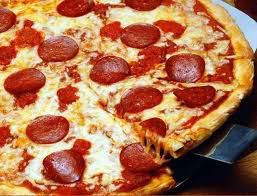 Another prime example of people trying to improve the world through food is the internet based program Random Acts of Pizza: Restoring Faith in Humanity, One Slice at a Time. In a nutshell, people read hard luck stories, which have been posted to